

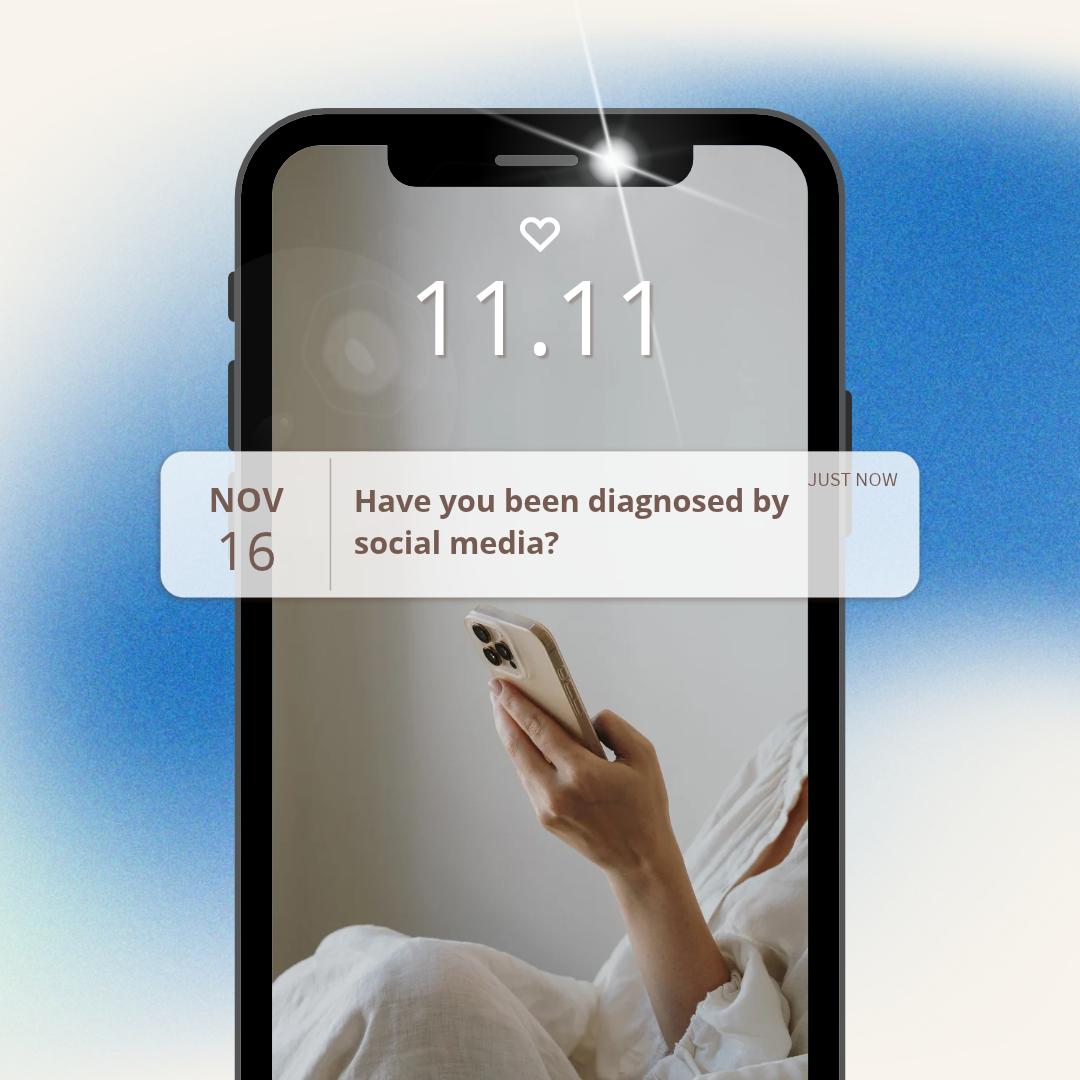
Have you ever been diagnosed by TikTok or Instagram?
- “5 signs your procrastination is actually an ADHD paralysis freeze…”
- “Signs you’re actually dissociating, not just daydreaming…”
- “Feeling drained after socializing? You’re not an introvert—you’re overstimulated and dysregulated.”
Relating to someone’s experience or seeking advice from others online can create community, understanding, and a sense of “I’m not the only one.” This is a good thing.
The problem lies in over-medicalizing normal human reactions. Social media rewards quick, shocking, and universally relatable content, as a result, algorithms can quickly turn shared experiences into echo chambers that distort how we interpret our own everyday behaviour.
A 30-second video can easily reframe healthy coping strategies, everyday stress, or routine interpersonal friction as clinical disorders. For example, needing an evening to yourself becomes a “trauma response.” Putting off laundry becomes a “debilitating executive dysfunction crisis.” Having a clumsy argument with a partner gets stamped as “narcissistic abuse.”
Self-ordained wellness influencers are a part of this pathologizing landscape. Trying to reach as many people as they can, often, their messages are watered-down to be as relatable as possible. This is not relational; this is exploitative and can be dangerous if not filtered with a critical lens.
If you find yourself caught in the mental health doom scroll, keep these principles in mind:
- Don’t self-diagnose from short-form videos. Content designed for clicks cannot capture the context, history, or nuances of your life.
- Do use online insights as curiosity not a diagnosis. Treat relatable videos as prompts for reflection rather than clinical proof.
- Seek personalized support when patterns persist. Real mental health support doesn’t happen in a feed because care needs context. At the Glebe Counselling Centre, support is closer than you think.
If you find yourself interested in self-diagnosis in the digital age you might like these posts:
https://harbormentalhealth.com/2025/07/01/mental-health-and-social-media-self-diagnosis/